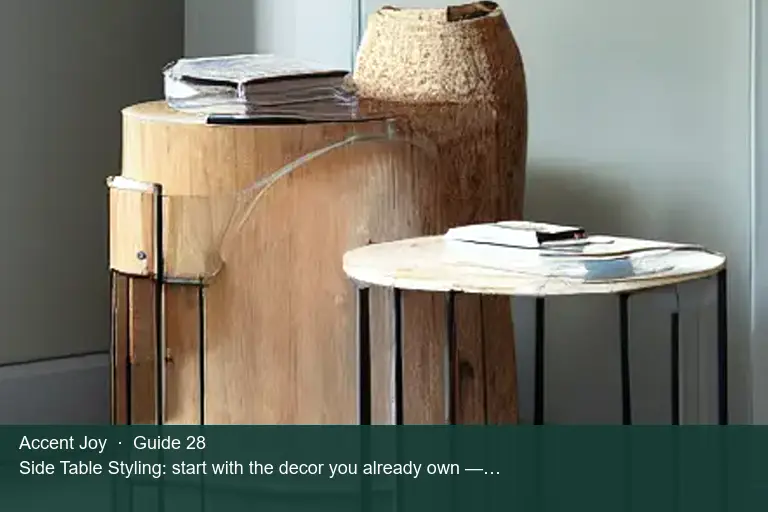
Side Table Styling: start with the decor you already own — decision tree for a short styling session; setup for two people
Side tables, or "side tables," are an essential piece of furniture in any home. They serve as the backbone of a dining area, a seating area, or even as a centerpiece for a living room. The key to a great side table is not just the decorative elements, but the choice of materials, the style, and the overall design.
A great side table should be functional, elegant, and aesthetically pleasing. It should stand out among the other furniture in the room and be a focal point. The key to a successful side table is to start with the decor you already own. Here’s a decision tree for a short styling session:
- **Select a Material**: The material of the side table should be clear and durable. Materials like wood, metal, or glass are great choices. Consider the type of table you have, whether it’s a dining table, a seating table, or a dining chair. The choice of material will affect the look and feel of the table.
- **Choose a Style**: The style of the side table should complement the decor you have. Different styles can have different aesthetic effects. For example, a simple, modern design might be better suited for a modern living room, while a rustic, traditional design might be better for a cozy, traditional living room. The style of the side table should reflect the style of the room it is part of.
- **Consider the Overall Design**: The overall design of the side table should be simple and easy to navigate. It should be simple enough to be used for a few meals or just a few hours of conversation. The design should be easy to find and use, and it should be a focal point for the space.
- **Consider the Size and Width**: The size and width of the side table should be appropriate for the space it is part of. A small side table for a dining room might be more suitable than a large side table for a bedroom. The size and width of the table should allow for easy access and use.
- **Consider the Placement**: The placement of the side table should be in a way that allows for easy access and use. It should be placed near the dining area, where meals are typically taken, or near the seating area, where people are seated. The placement of the table should allow for easy access and use, and it should be a focal point for the space.
- **Consider the Finishing Touches**: The finishing touches of the side table should be simple and easy to find. This means the finish should be simple and not too complex, like a wooden finish or a glossy finish. The finish should be easy to find and use, and it should be a focal point for the space.
- **Consider the Price**: The price of the side table should be a consideration. There are many different brands and models available, and each one may have a different price point. The price of the side table should be a consideration, and it should be a consideration that fits within your budget.
- **Consider the Space**: The space where the side table is located should be a space where you can comfortably sit and enjoy the ambiance of the table. It should be a space where you can comfortably sit and enjoy the ambiance of the table, and it should be a space where you can comfortably sit and enjoy the ambiance of the table.
By following this decision tree, you can start with the decor you already own and make a decision on the materials, style, and overall design that will create a great side table. The key to a successful side table is to start with the decor you have, and to use that as a reference for the overall design and style.