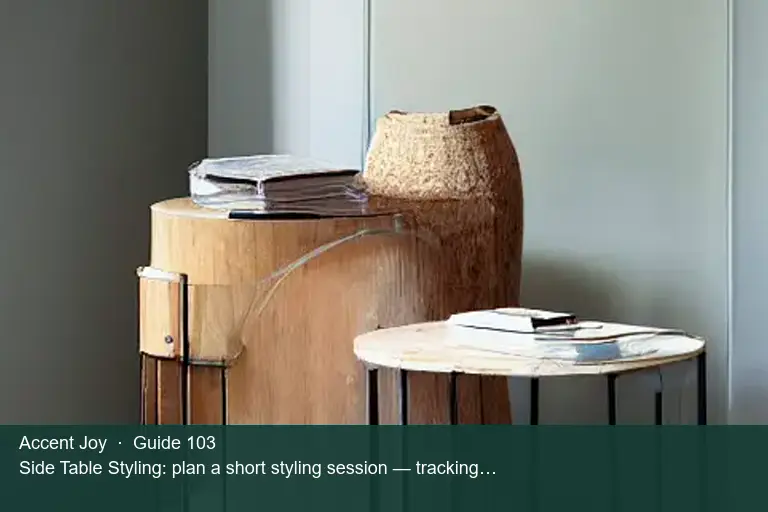
Side Table Styling: plan a short styling session — tracking sheet for a narrow display area; setup for two people
Side table styling: a practical session for short projects
A side table is more than just a storage solution; it's a focal point in a home's décor, a focal point in a room's decor. Whether you're looking for a simple, functional piece of furniture or a more sophisticated piece to add a touch of flair, here's a step-by-step guide to creating a side table that suits your needs, budget, and style.
Setting up a side table is a straightforward task that doesn't take long. Begin by choosing a piece of furniture that complements your existing decor and style. This could be a sleek, modern piece or a more rustic piece, depending on your preferences. Decide on the size of the table and choose a style that matches your preference for a modern, minimalist, or rustic style.
Next, you'll need to plan where you want to place your side table. If you're in a room with a narrow display area, you'll need to plan the layout of your space. Decide on the height and placement of your side table, depending on how much space you have for it. This will help ensure the table fits seamlessly into your space.
After choosing your pieces and deciding on the size and style, you'll need to purchase your pieces. Check out local craft stores, home decor stores, or online to find the pieces you need. Make sure to purchase pieces that fit with your existing decor and style.
Once you've purchased your pieces, you'll need to assemble the table. Depending on your style and your budget, you may need to assemble your pieces yourself or hire a professional. If you're assembling yourself, make sure to use the right tools and follow the right assembly instructions. If you're hiring a professional, make sure to follow their instructions and work with them to ensure your table is assembled correctly.
Once your table is assembled, you'll need to make sure it's properly positioned and displayed. Position your table in the right spot in your room, depending on how much space you have. Make sure to keep the table level, if possible, to ensure it's displayed properly.
After assembling and positioning your table, you'll need to display your table. Depending on your style and your budget, you may need to display your table in a different way than the way you assembled it. If you're displaying your table in a different way, make sure you have the right tools and display them accordingly.
Once your table is displayed, you'll need to make sure it's kept in good condition. Keep your table in good condition by cleaning it regularly and maintaining it with care. If your table is showing signs of wear or damage, you'll need to make sure it's fixed or replaced accordingly.
In conclusion, a side table is more than just a storage solution; it's a focal point in a home's décor, a focal point in a room's decor.