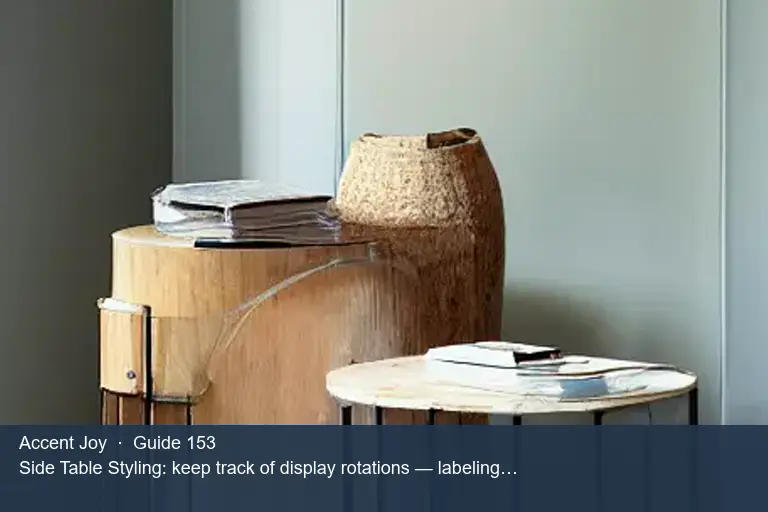
Side Table Styling: keep track of display rotations — labeling scheme for incomplete measurements; setup for two people
When working on side table styling with incomplete measurements, it’s important to establish a clear system from the start. Begin by sketching a simple layout or using a digital tool to visualize how the piece will look in different orientations. This helps prevent confusion later when adjustments are needed. For two people collaborating, assign roles—one focuses on design, while the other manages measurements and rotations. Consistency is key; agree on a labeling scheme for each angle or position to avoid miscommunication.
As you set up the table, consider rotating it slightly to test balance and aesthetics. This small adjustment can make a big difference in how the piece interacts with its surroundings. Keep a notebook or digital app handy to jot down notes about each rotation, noting what works and what doesn’t. This practice builds a reference that saves time and effort later.
When you reach a stopping point, take a moment to review your layout one final time. Ensure all elements are aligned and the styling reflects your vision. This step ensures you’re not just placing items randomly but curating a cohesive look. With these strategies, even without precise measurements, you can still achieve a polished side table presentation.