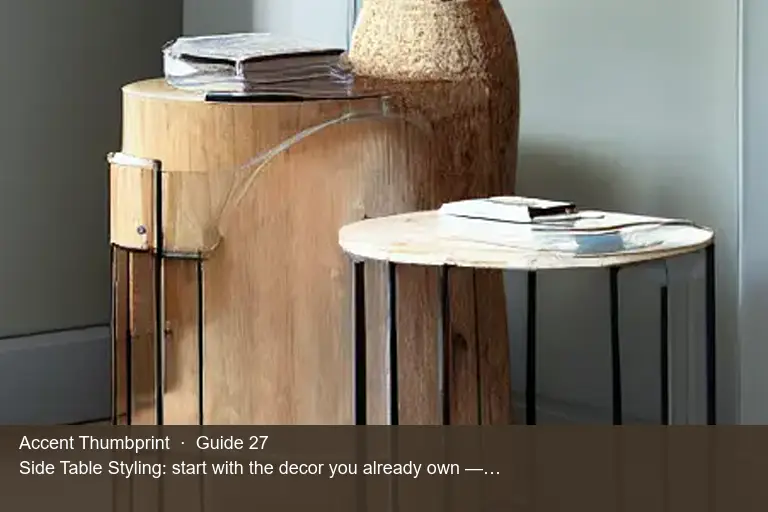
Side Table Styling: start with the decor you already own — checklist for a short styling session; setup over six weeks
Side tables have been the go-to for storing and displaying items since ancient times, and they continue to be a staple of everyday life. Whether you're a busy office worker, a student on a tight budget, or a casual home dweller, side tables can add a touch of personality and style to your space. This article will help you get started with side table styling, focusing on the decor you already own and creating a short, six-week project plan.
Before we dive in, let's take a moment to appreciate the history of side tables. They've been around since ancient times, with records of side tables dating back to the 18th century. Today, they're a versatile and popular choice, often used as a tool or as a display piece. Here are six tips and ideas to help you start with your own side table decor:
- Start with a solid base: The first step in any project is the foundation. Choose a sturdy, durable base for your side table. This could be a wooden plank, a metal stand, or a metal or plastic piece that can support the weight and style of your items.
- Incorporate your existing decor: Your existing decor will be the foundation for your side table decor. Select pieces that complement your existing furniture and add a touch of personality to your space. Consider adding a photo on the back of the table, a vase or a small piece of artwork to give it a visual focal point.
- Choose a theme: Decide on a theme for your side table. This could be a color scheme, a type of furniture, or a style of decor. Choose a theme that you're excited about and aligns with your existing decor.
- Start with a simple design: Start with a simple design for your side table. This could be a simple, geometric shape or a simple, straight design. This will give your side table a clean and modern look, which will be more appealing to your customers.
- Add accessories: Add accessories to your side table to complete your decor. This could be a small vase, a piece of wood, or a piece of fabric. These accessories will add more depth and personality to your side table and make it stand out in your space.
- Get feedback: Get feedback from your family, friends, or clients to see what they think of your side table decor. This will help you adjust your decor and make any necessary changes to your design.
Now, let's move on to creating a six-week project plan for your side table decor. Here's how you can start:
Week 1: Determine your decor: Choose a solid base, incorporate your existing decor, choose a theme, start with a simple design, add accessories, and get feedback.
Week 2: Design your side table: Choose a solid base, incorporate your existing decor, choose a theme, start with a simple design, add accessories, and get feedback.
Week 3: Design your side table: Choose a solid base, incorporate your existing decor, choose a theme, start with a simple design, add accessories, and get feedback.
Week 4: Design your side table: Choose a solid base, incorporate your existing decor, choose a theme, start with a simple design, add accessories, and get feedback.
Week 5: Design your side table: Choose a solid base, incorporate your existing decor, choose a theme, start with a simple design, add accessories, and get feedback.
Week 6: Design your side table: Choose a solid base, incorporate your existing decor, choose a theme, start with a simple design, add accessories, and get feedback.
At the end of your project plan, you should have a clean and modern side table decor that reflects your existing decor, your theme, and the feedback of your family, friends, or clients. Remember, the key to successful side table decor is to start with your existing decor and add your style.