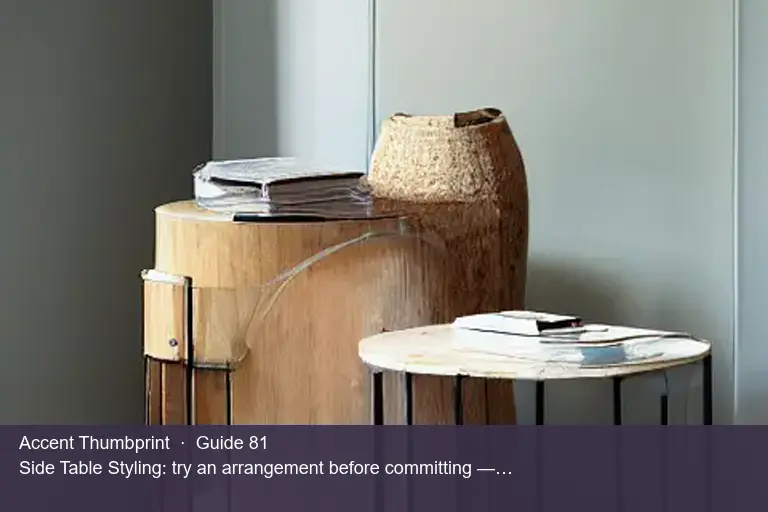
Side Table Styling: try an arrangement before committing — trial protocol for a first display plan; setup over six weeks
Side tables are often the focal point of a home, their unique style often influencing how others perceive the room. Whether you prefer a minimalist approach or a more eclectic design, there are countless ways to arrange them to complement your decor. However, before you make your decision, it's essential to understand the difference between a traditional and a modern arrangement, so you can choose the most appropriate one for your space.
The traditional side table is typically a single piece, with a simple design and a sturdy frame. It's easy to assemble and maintain, making it a versatile choice for a small or modest space. Traditional side tables are perfect for a simple, minimalist look, with a neutral color palette, and a sturdy design that can withstand the wear and tear of daily use.
On the other hand, modern side tables are a bit more elaborate, with a more open design, and a wider range of materials, such as wood, metal, and glass, that can be customized to fit your space and the decor you want to bring in. Modern side tables are also designed to be more mobile, allowing you to adjust their height and width to suit your decor, and to change their color and material to match your desired design.
If you're looking to add a modern side table to your space, here's a guide for you to help you decide which is best for your needs.
Step 1: Understanding the differences between traditional and modern side tables.
- Traditional side tables: These are simple, single piece pieces, with a sturdy frame. They're easy to assemble and maintain, making them a perfect choice for a small or modest space.
- Modern side tables: These are more elaborate, with a wider range of materials, such as wood, metal, and glass, that can be customized to fit your space and the decor you want to bring in.
Step 2: Consider your decor and the style you want to bring in.
- Traditional side tables: These are great for a simple, minimalist look, with a neutral color palette and a sturdy design that can withstand the wear and tear of daily use.
- Modern side tables: These are more flexible, allowing you to adjust their height and width to suit your decor and the design you want to bring in.
Step 3: Consider your budget and the materials you can afford.
- Traditional side tables: These are more affordable than modern side tables, but they're also more limited in their customization options.
- Modern side tables: These are more expensive, but they offer more customization options and can be customized to fit your space and the decor you want to bring in.
Step 4: Consider your space and your decor.
In conclusion, when deciding the best side table arrangement for your space, consider your decor, budget, and materials you can afford. Traditional side tables are perfect for a simple, minimalist look, while modern side tables offer more flexibility and customization options. By understanding the differences between the two, you can choose the most appropriate arrangement for your space.