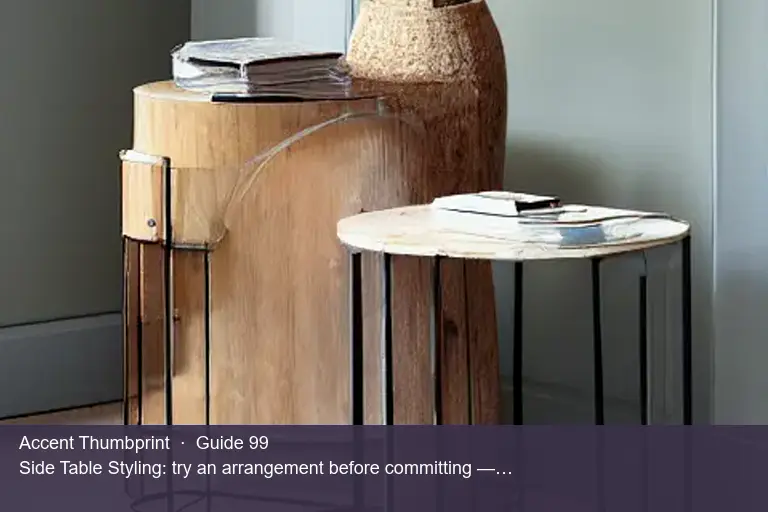
Side Table Styling: try an arrangement before committing — measurement guide for a household handover; setup over six weeks
Side tables are an essential furniture accessory in any household, but choosing the right type can be a daunting task. Before you commit to an arrangement, consider the following practical tips and the measurement guide for a six-week project plan.
- Select the right size: A side table is a statement piece and should complement the furniture it's arranged around. Consider the size of your existing furniture and the space available for your new furniture. For example, if you have a 100 sqft living room, a 120 sqft bedroom, or a 70 sqft kitchen, a 90 sqft side table will be more suitable than a 130 sqft side table.
- Measure the room: Measure the room and the furniture in the space for the new side table. This is important because it ensures the side table fits perfectly in the room without disturbing the furniture. Measure the width, length, and depth of your furniture, and then measure the width and length of your room. This will help you determine the best size for your side table.
- Choose a color: The color of your side table can be a significant factor in the overall look of your room. Consider the color scheme of your furniture and the color you want to use for your side table. For example, if you have a white sofa, a black coffee table, and a red rug, a black and white side table will be more suitable than a red and white side table.
- Select a material: The type of material used for your side table can affect its durability and appearance. Consider the type of material you want to use for your side table, such as wood, metal, or glass. Wood is ideal for a side table as it is easy to clean and maintain. Metal is ideal for a side table as it is durable and easy to work with. Glass is ideal for a side table as it is light and can be used in various decor styles.
- Consider the lighting: Lighting is an essential element of any furniture arrangement. Consider the lighting you want to use for your side table, such as a bedside lamp or a chandelier. Lighting can affect the overall mood of your room and the atmosphere you want to create.
- Select a storage solution: Finally, consider the storage solution you want to use for your side table. Consider the type of storage you want to use for your side table, such as drawers or shelves. Storage solutions can help keep your side table organized and avoid clutter.
Measurement guide for a six-week project plan:
Week 1: Measure the width and length of your furniture, and then measure the width and length of your room.
Week 2: Measure the width, length, and depth of your furniture, and then measure the width and length of your room.
Week 3: Measure the width, length, and depth of your furniture, and then measure the width and length of your room.
Week 4: Measure the width, length, and depth of your furniture, and then measure the width and length of your room.
Week 5: Measure the width, length, and depth of your furniture, and then measure the width and length of your room.
Week 6: Measure the width, length, and depth of your furniture, and then measure the width and length of your room.
By following these steps, you can select the right size for your side table, measure the space for your new furniture, choose a color, select a material, consider the lighting, select a storage solution, and select a size for your side table. The measurement guide for a six-week project plan will help you ensure the best arrangement for your side table without disturbing your furniture or the room.
Remember, side tables are not just decorative elements but essential furniture pieces that can add value to your home. By selecting the right size for your side table, you can create a functional and organized living space.