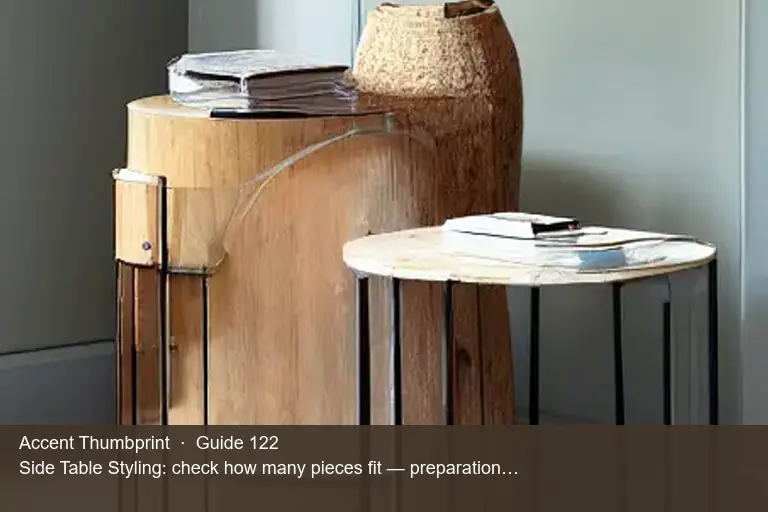
Side Table Styling: check how many pieces fit — preparation guide for a first display plan; setup over six weeks
Side table styling is an essential aspect of home decor, and choosing the right pieces for your living space can make a significant impact on the ambiance and functionality of your living room. If you're looking to incorporate side tables into your home, it's important to know how many pieces you can fit and how to plan a first display plan for your living room. This article will provide you with a practical guide on how to check how many pieces fit and how to organize your side table display plan for six weeks.
First, let's understand the basics: side tables are typically used for dining or socializing, and they can come in various sizes, styles, and shapes. By knowing how many pieces fit and how to plan your display plan, you can ensure that your living room is visually appealing and functional.
Now, let's check how many pieces fit into your living room. Start by measuring the dimensions of your living room. This will help you determine how many pieces are needed to fit around the perimeter of the room. For example, if your living room is 10 feet long and 6 feet wide, the total area of the room is 60 square feet. Therefore, you need 60/10 = 6 pieces of furniture to fit around the perimeter of the room.
Next, consider the layout of your living room. What kind of furniture do you have and where do you want to place the side table? Determine how many pieces of furniture you need to fit around the perimeter of the room and the center of the room, and then calculate the number of pieces required for each part of the room.
To plan your display plan, start by dividing your living room into sections. Each section should be a square or rectangular shape. For example, you can divide the living room into two sections, each 4 feet by 4 feet. This will give you 8 pieces of furniture to fit around the perimeter of the room and the center of the room.
Next, arrange your pieces in the correct order. Start with the largest piece and work your way down to the smallest piece. If you have multiple pieces, arrange them in a sequence, such as top, center, bottom, top, etc.
To ensure that your side tables are visually appealing, you can use a variety of materials, such as wood, metal, or glass. Choose a material that complements the overall color scheme of your living room. For example, if your living room is in a neutral color scheme, you can use wood or glass as a material for the side table.
To ensure that your side tables are functional, you can choose materials that are comfortable to sit on, such as wood or metal. Use a variety of materials, such as wood, metal, or glass, to create a cohesive look.
Finally, once you have your side tables arranged in the correct order and you have created a display plan, you can start to display your side tables. Start by placing each side table in the correct position, such as the center of the room or on the end of the room. For example, you can place the larger piece of furniture in the center of the room and the smaller piece of furniture at the end of the room.
To display your side tables, you can use a variety of methods, such as hanging them on the walls, placing them in a display rack, or placing them in a decorative basket. Use a variety of methods, such as hanging them on the walls, placing them in a display rack, or placing them in a decorative basket.
In conclusion, side table styling is an essential aspect of home decor. Remember to always consider your budget and personal style when selecting and arranging your side tables. With a little planning, you can create a living room that is both functional and beautiful.