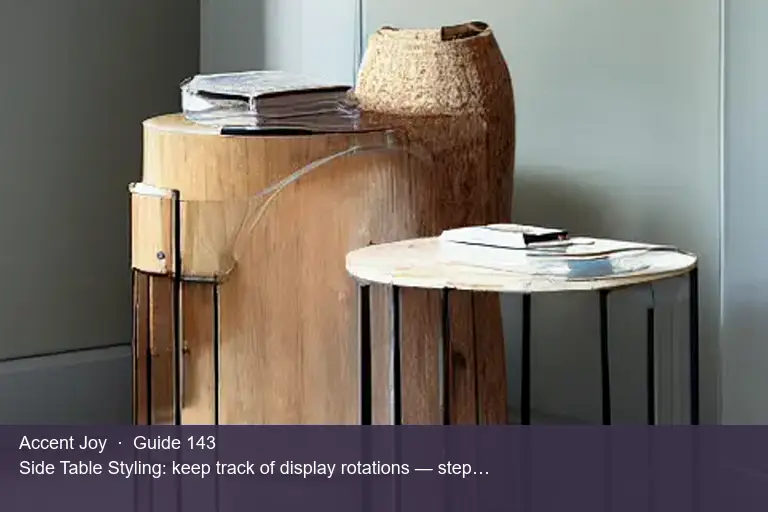
Side Table Styling: keep track of display rotations — step sequence for a narrow display area; setup for two people
Side tables are a vital piece of furniture, yet many people overlook their importance in maintaining a neat and clutter-free living space. When it comes to side tables, the decision on where to put them is as crucial as the choice of what to display. A narrow display area can be a challenge, yet with the right steps, you can effectively manage display rotations and ensure your side tables are used efficiently. In this article, we will discuss the practical task of side table styling: keeping track of display rotations, step sequence for a narrow display area, and setup for two people.
When a narrow display area is limited, maintaining display rotations becomes even more critical. The first step in managing display rotations is to ensure each side table is properly positioned. This means measuring the width of the display, determining how many side tables you need, and then positioning each one accordingly. To make the process easier, you can use a ruler or a measuring tape to determine the width of the display. Once you know the width, you can use a measuring tape to determine the height of each side table, and then measure the distance between the edges of the tables to ensure they are at the correct height. By positioning each side table appropriately, you can avoid overcrowding the space and ensure the display is always in the desired orientation.
Once you have positioned the side tables, the next step is to decide what to display. The second step in managing display rotations is to decide what to display. This can be a straightforward task, or it can be more complex, depending on your needs. If you are displaying books or other items that will be placed on top of the side tables, you will need to decide how much space you have available for the display. To make the process easier, you can use a calculator or a spreadsheet to determine the desired space. Once you have the space, you can decide which items will be displayed and arrange them accordingly. If you are displaying a larger item, such as a painting or a sculpture, you will need to decide how much space you have available for the display.
Finally, to ensure your side tables are used efficiently, you will need to manage display rotations. The third step in managing display rotations is to manage display rotations. If you are managing display rotations, you will need to decide how often you need to display each side table. To make the process easier, you can use a calendar or a spreadsheet to determine the frequency. Once you have the frequency, you can decide when each side table will be displayed and arrange them accordingly.
In summary, side table styling involves managing display rotations. The first step is positioning the side tables, the second step is deciding what to display, the third step is managing display rotations, and the fourth step is using the tools and resources available. By following these steps, you can keep track of display rotations and ensure your side tables are used efficiently.