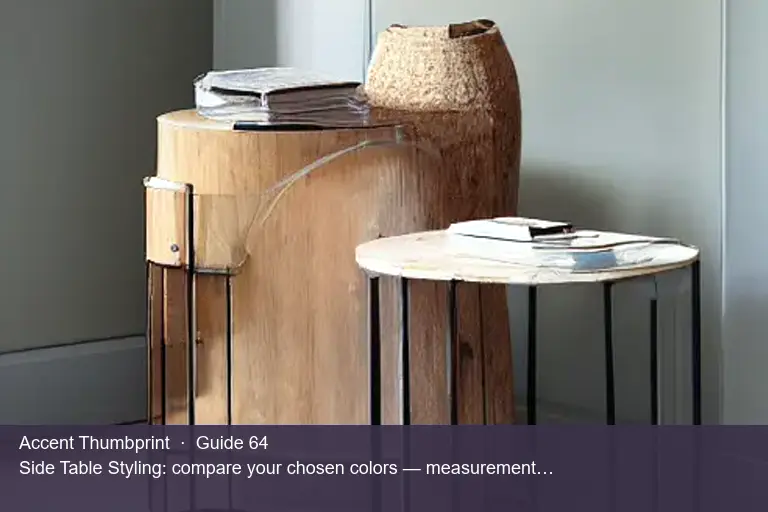
Side Table Styling: compare your chosen colors — measurement guide for a narrow display area; setup over six weeks
**Side Table Styling: Comparison, Measurement Guide for a Narrow Display Area**
The side table is often a focal point in a home, serving as a centerpiece for a living room or dining area. To ensure a well-maintained and visually appealing side table, you need to consider color choices, size, and measurements. This guide will help you compare your chosen colors for a narrow display area, with a six-week project plan to complete over six weeks.
**Color Selection**
The color of the side table is crucial in determining its aesthetics and function. Here are some popular color schemes and their pros and cons:
- **Monochromatic** (Black, White, Grey)
- **Pros:** Simple, timeless, easy to clean. - **Cons:** Can be monochromatic, lacking vibrancy.
- **Monochromatic** (Black, Grey, Red)
- **Pros:** Vivid, unique, easily adjusted. - **Cons:** Can be monochromatic, not easily adjustable.
- **Monochromatic** (Black, White, Grey, Red)
- **Pros:** Versatile, easy to adjust, adjustable. - **Cons:** Can be monochromatic, not versatile.
- **Monochromatic** (Black, White, Grey, Red)
- **Pros:** Simple, timeless, easy to adjust. - **Cons:** Can be monochromatic, not versatile.
**Measurement Guide for a Narrow Display Area**
A narrow display area can be a challenge, but with the right color choices, it can be a rewarding feature. Here is a six-week project plan to complete over six weeks:
**Day 1-4: Preliminary Planning**
- **Select a Color Scheme:** Choose a color scheme that best fits your personal style and the theme of your living room. This could be a monochromatic, monochromatic, or monochromatic color scheme. Consider the color you want to use in the living room, your home decor, and your budget.
- **Measure the Space:** Measure the space in your living room to determine the size of the side table. Measure the height of the table in the living room and the distance between the table and the wall. Ensure the table has enough space to be comfortable for you to sit.
**Day 5: Selection of Colors**
- **Select Colors:** Based on your measurements, select a few colors for the table. These colors should complement each other and not clash with each other. Consider using a color that is more neutral and less distracting.
**Day 6: Placement of the Table**
- **Position the Table:** Position the table in your living room where you want it to be. Use it as a focal point for the room. Avoid placing it too close to the wall or too far from the wall.
**Day 7-8: Adjustment and Maintenance**
- **Adjust the Table:** Adjust the table to ensure it is level and stable. Ensure the table is not too high or too low, as this can affect its function.
- **Maintenance:** Regularly check the table for dirt or stains. Dust regularly and replace the table if necessary.
**Day 9-10: Final Checks**
- **Final Check:** Check the table to ensure it is still in good condition. Remove any dust or dirt and replace the table if necessary.
- **Color Check:** Ensure the color matches your measurements and your personal preference. Adjust the table if necessary.
**Day 11-12: Final Adjustments**
- **Adjustments:** Adjust the table to your desired size. Ensure the table is not too high or too low.
**Conclusion**
By following this six-week project plan, you can ensure that your side table is a well-maintained and visually appealing feature that complements your living room or dining area. Remember, the key to a successful side table is consistency in your color choices and the measurement of your space.