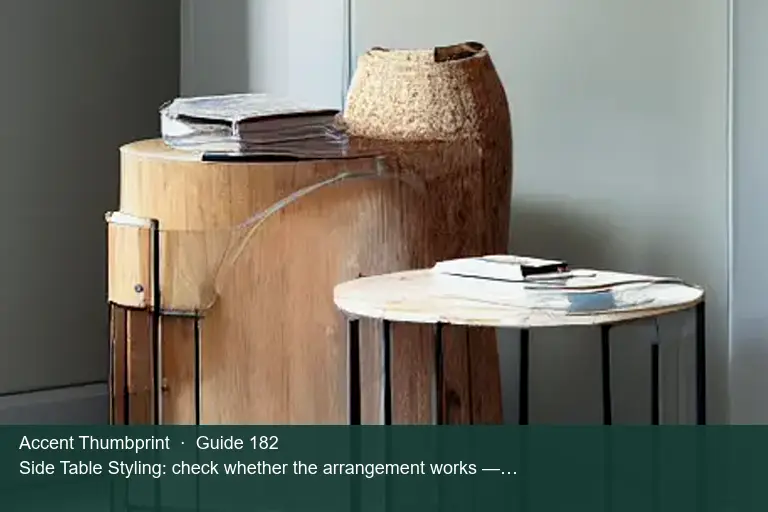
Side Table Styling: check whether the arrangement works — reset routine for a first display plan; setup over six weeks
**Side Table Styling: A First Display Plan for a First-time Displayer**
In the realm of side table styling, a first-time displayer may find themselves at a crossroads when selecting a side table. Whether it's a minimalist or a modern piece, the right side table is not only a functional piece but also a statement piece that sets the tone for a room. The key to a successful side table is to create a first display plan that aligns with the space, the mood, and the personality of the room.
**Understanding the Space**
First, a side table's placement is crucial. It should be placed in a way that complements the room's layout and enhances its overall aesthetic appeal. For a first-time displayer, the most ideal setting is a living room or a living room with a focal point, such as a fireplace or a fireplace wall. The room should have enough space for the side table to stand and display a small, yet functional, piece or items.
**The Mood and Personality**
The next step is to consider the mood and personality of the room. For a first-time displayer, the primary aim is to create a space that feels inviting and comfortable. A side table should be a focal point that can be adjusted to fit the mood and personality of the room. For instance, a modern living room might benefit from a minimalist side table, while a cozy living room might prefer a more rustic side table.
**The Type of Side Table**
The type of side table is another key factor. A side table should be designed to complement the space, the mood, and the personality of the room. For a first-time displayer, a side table that can be adjusted to fit the mood and personality of the room is ideal. For example, a side table with a straight, sleek design, or a side table with a rustic, textured finish, can be easily adjusted to fit a modern living room or a cozy living room.
**Setting the Stage**
To create a first display plan, a first-time displayer should start by selecting a side table. A side table is the foundation of any display, and it's important to choose one that complements the space, the mood, and the personality of the room. Once a side table has been chosen, it's time to set the stage. This involves creating a layout that enhances the space, the mood, and the personality of the room.
**Creating a Layout**
Creating a layout is essential to creating a first display plan. The layout should include the space, the mood, and the personality of the room. For a living room with a fireplace, the layout should include the fireplace, the side table, and the items that can be displayed on the side table. For a living room with a fireplace wall, the layout should include the fireplace, the side table, and the items that can be displayed on the side table.
**Displaying the Side Table**
Once the layout is set, it's time to display the side table. Displaying the side table is not only a matter of aesthetics, but also a matter of functionality. The side table should be displayed in a way that enhances the space, the mood, and the personality of the room. For a living room with a fireplace, the side table should be displayed in a way that enhances the fireplace. For a living room with a fireplace wall, the side table should be displayed in a way that enhances the fireplace wall.
**Conclusion**
In conclusion, a first-time displayer should start by selecting a side table. Creating a layout is essential to creating a first display plan.
By following these steps and using the resources at hand, a first-time displayer can create a first display plan that complements their space, the mood, and the personality of the room.