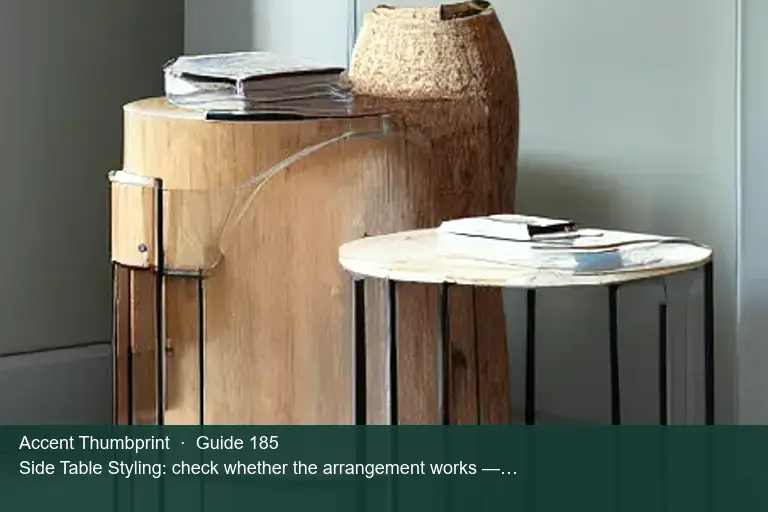
Side Table Styling: check whether the arrangement works — choice rubric for a shared room; setup over six weeks
Side table styling is a practical task for adults aged 50+ in the US and Canada. It involves choosing and arranging the right side table to fit the room's décor, function, and personal style. This article will guide you through the process of selecting and arranging a side table, along with a practical checklist to ensure it works for your shared room.
### Side Table Style and Decor
When selecting a side table, consider the room's decor, which should complement the furniture and personal style. For example, a modern, minimalist space might benefit from a sleek, geometric side table. Conversely, a more traditional, ornate room might appreciate a more traditional side table. Choose a side table that complements the existing décor and makes the most of the space.
### Functionality and Ergonomics
Side tables serve a functional purpose, but their design should also be ergonomic. For instance, a side table that is too high or too low might be uncomfortable. Ensure the table is at the right height, and choose a layout that is comfortable for the person using the space. For instance, a high side table might be uncomfortable for someone with a long neck, while a low side table might be uncomfortable for someone with a short neck. Consider your own comfort level as well.
### Personal Style
Your personal style should influence the side table's design. For instance, if you prefer a minimalist style, you might opt for a sleek, geometric side table. On the other hand, if you prefer a more traditional style, you might opt for a more traditional side table. Choose a side table that reflects your personal style and makes the most of the space.
### Checklist for Side Table Styling
Before you begin your six-week project, prepare a checklist for side table styling. This checklist will help you check whether the arrangement works and make sure the side table fits your room's décor, function, and personal style. Here's a sample checklist:
- **Room Decor:**
- Does the room have a modern, minimalist, ornate, or traditional décor? - Are there any specific décor elements you want to incorporate? - What kind of décor elements do you want to incorporate?
- **Functionality:**
- Do you prefer a sleek, geometric side table or a more traditional side table? - How will you use the space? - What are your personal preferences?
- **Ergonomics:**
- Is the table too high or too low? - Is the table comfortable for you? - Do you have long or short necks?
- **Personal Style:**
- Do you prefer a minimalist style? - Do you prefer a more traditional style? - What are your personal preferences?
- **Ergonomics:**
- Is the table too high or too low? - Is the table comfortable for you? - Do you have long or short necks?
- **Ergonomics:**
- Is the table too high or too low? - Is the table comfortable for you? - Do you have long or short necks?
### Check the Arrangement
Before you start the project, check the arrangement. Ensure the table is at the right height and is comfortable for you. For instance, if you prefer a traditional side table, you might want to check if it is at the right height and is comfortable for you.
### Conclusion
By following this checklist and checking the arrangement, you can ensure that your side table styling is successful. Remember to start early and prepare a checklist for your project to make sure the arrangement works and fits your room's décor, function, and personal style.